
ITHANE
Input Is Infrastructure

Stop feeding automation with ambiguity.

Enterprises modernized execution layers (RPA, workflows, APIs, agents). Yet operations still start with ungoverned inputs—emails, tickets, chat, spreadsheets. ITHANE converts operational requests into standardized, execution-safe action signals.

0
avg annual cost of poor data quality (Gartner, 2020)
0
estimated annual cost of bad data in the US economy (HBR citing IBM)
upstream
ITHANE sits before execution—contracts first, automation second

Platform

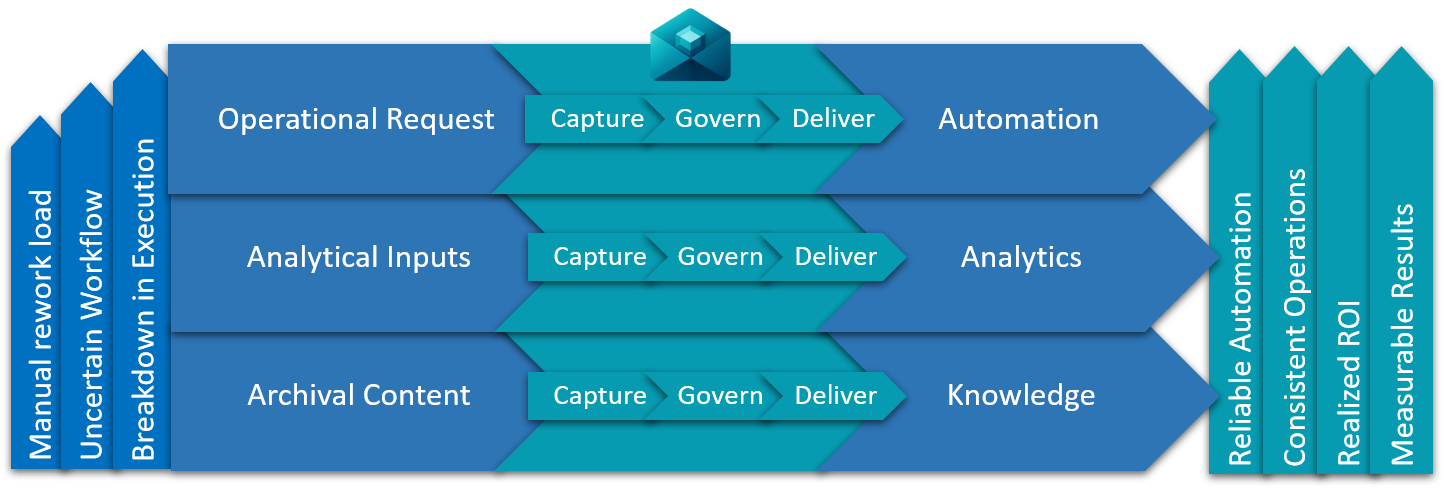
Think of ITHANE as an input control layer. It standardizes intent, verifies readiness, and routes execution deterministically—so your execution stack stops absorbing ambiguity.

Email Tickets Chat Spreadsheets ITHANE RPA Workflows APIs AI Agents
Infrastructure rule: execution should never be the first place where ambiguity is detected.

Action contracts

Each request maps to a controlled action name—consistent semantics across teams, regions, and channels.

Readiness gating

Missing context is caught before execution. Blocking reasons are explicit and measurable.

Policy-driven routing

Central steering routes to bot/workflow/API/queue with versioned rules and operational traceability.

Why automations break

Failures are rarely “RPA problems.” They are upstream contract problems: incomplete identifiers, inconsistent semantics, missing preconditions, changing exception rules, and uncontrolled request formats.

Reality in operations

Your most expensive failures happen when execution starts, then stops—after time is already spent. ITHANE shifts that detection point upstream.

Standardize intent across channels and humans
Make missing context measurable, not anecdotal
Version-control routing and policy decisions
Trace outcomes: request → decision → action
ITHANE flow (click to zoom)
See it in product view →
Deterministic input contracts. Audit-first governance.

Capabilities

Built for operations / process excellence leaders who care about throughput, exception rate, and auditability—not hype.

Controlled action names
Remove “same request, different wording” from operations.
Domain packs
Ship with domain-specific actions, required fields, and exception rules.
Change management
Versioned catalogs so automation logic stays stable across change.
Required-field policy
Define what must be present before execution starts.
Blocking reasons
Explicit reasons for not executing—reportable and coachable.
Input quality metrics
Measure what teams send, not only what bots fail to do.
Policy-driven route
Bot vs workflow vs API vs queue—decided centrally.
Exception steering
Route edge cases consistently instead of building divergent fixes.
Tool-neutral
Works with your execution stack—RPA, BPM, integration, agentic.
Audit trail
Trace: request → intent → decision → route → action.
Deterministic outputs
Infrastructure behavior: predictable, testable, repeatable.
Security posture
Design to minimize leakage: control what enters execution.
Infrastructure is about contracts and determinism. ITHANE defines action contracts, validates readiness, and routes execution with policy and audit—so reliability improves regardless of which model or RPA tool you use.
Upstream of execution: API gateway, message queues, ticket/email intake, or workflow entry points. It’s designed to sit at the boundary where operations become execution.
It’s shared infrastructure: Operations owns the meaning (actions, required fields, policy). IT owns deployment, security, and integration. ITHANE provides the control surface both sides need.

Trust signals

Designed for production reality: measurable readiness, versioned decisions, operational traceability.

Versioned action catalogs
Domain-controlled, change-safe
Readiness scoring
Explicit blocking reasons, measurable improvement
Policy routing
One place for decisions across bots and workflows
Audit-first
Trace intent → decision → action
Investor-grade thesis (without sounding like a thesis)

The next wave of automation ROI comes from input governance. Execution is commoditizing. Reliability is the moat.

Resources

Walkthrough video

Product entry points

Request technical walkthrough

Share 3–5 real operational request patterns. We’ll map them to action contracts and show how your execution layer becomes more reliable.
Email request